


Facing The End: Director Nicolas Dozol on His Feature Film “Last Party”
Updated: Mar 17

Inside Last Party (Dernière Soirée): Four Teens, One Night, and The Search For Meaning
During the last night of school, four teenagers (Angela, Alexander, Lily, and Ethan) find themselves stuck together at a party that doesn’t quite go as planned. What starts as a typical night turns into something deeper when they realize they might not get out. “Last Party” (Dernière Soirée) follows their conversations, tensions, and the small moments that reveal who they really are when the noise of the world falls away.
Director Nicolas Dozol spoke with journalist Xavier Leherpeur about how the project came together, his unusual background in dance, and how the film connects to the generation growing up after the pandemic.
From Dance to Film
“I grew up in Haute-Savoie, near the Swiss border, but on the French side,” Dozol says. “I started dancing when I was three. When I turned seventeen, I went to Lyon to study at the conservatory, then to Maurice Béjart’s school.”
After years in dance, he felt ready for something new. “I needed a break from that world, so I moved to Paris and studied cinema for three years at the Conservatoire Libre du Cinéma Français. That experience helped me get to know every job on a film set in a very hands-on way.”
Dozol’s early short films gained some surprise attention. One of them, Inside My Mind, didn’t make it into Clermont-Ferrand but was picked up by a French distributor and ended up streaming on Amazon Prime and Apple TV. “That was totally unexpected for such a small, low-budget project,” he says with a laugh. In 2020, he co-founded his own production company, Light Rush, in Geneva.
Creating “Last Party”
The idea for a feature came at the height of the pandemic. “We were already working on a script that had been written by four screenwriters,” Dozol explains.
“Lockdown gave us time to rewrite and rethink it. When the restrictions lifted, we just decided to move forward even though we didn’t have money or a location a month before the shoot.”
Everything came together in the final stretch. “That uncertainty became part of the film’s energy,” he says. “You can feel the post-Covid atmosphere in it and that sense of being trapped, but also wanting to start over.”
What the Story Explores
Dozol draws from his own upbringing in a private Catholic school. “It was a place with huge social gaps,” he says. “Some kids came from very wealthy families, others not at all. As a teenager I also interned at Swiss TV on an economics program that covered ‘hashtag rich kids’ and young people posting luxury lifestyles online. That contrast between image and reality stuck with me.”
He wanted to show how those social differences shape the way teens see themselves. Each of the four writers brought personal experience into their characters. “We wanted each role to be written by someone who understood that world,” Dozol says, noting that the female characters were written by women. “You can tell when a character hasn’t been written from real experience.”
Dozol wrote the part of Alexander, describing him as “the second to appear in the story, and in some ways the character closest to my own emotions at that age.”
How the Narrative Works
The script follows a simple rule: four characters, one space, one night. “We knew they needed to be trapped together,” Dozol says. “That pressure forces truth to come out.” While the story has heavy emotional moments, he wanted the overall tone to stay hopeful. “I didn’t want people to leave feeling depressed. The film ends with a sense of renewal. Even if it’s subtle, there’s light at the end of the night.”
Mirrors and Self-image
Mirrors show up throughout Last Party, and Dozol says that choice came from his love of Cocteau’s work. “Mirrors are about perception. Teenagers today are almost trained to think about how they appear more than who they are. We all build façades,” he explains. “The mirror scenes ask: what reflection do I show to others, and what’s the reflection of my real self?”
Behind the Scenes
Feature film Last Party runs about seventy minutes and was filmed to look like one continuous take. It was shot in a week around Geneva on a small budget with support from both Swiss and French producers.
“The idea of the long take was to make everything feel like real time,” Dozol says. “Through camera moves and rhythm changes, the movie gently shifts from something real to something closer to a dream.”
Much of the production relied on precise choreography between actors and camera operators, a detail that comes straight from Dozol’s background in dance. “The film is about young people in a hurry to grow up,” he adds. “They’re desperate to find meaning, to skip ahead. Over the course of the night, they realize how much they’ve overlooked. In the end, they understand those moments were their last ones together.”
Official Trailer: Feature Film Last Party
Main Cast
Lucie Cecchi – Angela
Lucie Cecchi developed a passion for performing arts at a very young age. She trained in acting at the Acting Studio in Lyon and appeared in several projects including the short film Miss Chazelles (broadcast on Arte) and the series Cassandre on France 3. In 2026 she also appears in Le Rêve américain alongside Raphaël Quenard and Jean-Pascal Zadi.
Rémi Gerard – Alexander
Rémi Gerard is both an actor and dancer. He trained at the Joinville-le-Pont Conservatory and later at the CNSMDP. He has worked with choreographers such as Béatrice Massin and Bruno Boucher. He also studied acting at Cours Florent in Paris and has appeared in several films including the Netflix production I Am Not an Easy Man.
Uma Condolo – Lily
Uma Condolo began acting at the age of thirteen in theatre clubs before studying performing arts at the University of Rennes and later at La Générale theatre school. She is currently part of the theatre company Prrrou.
Teddy Hardy – Ethan
Teddy Hardy studied acting at the Raymond Acquaviva school and has appeared in several short films including Paroles, paroles and Une Ballade dans la Nuit. He has also featured in various advertising campaigns.
About Nicolas Dozol
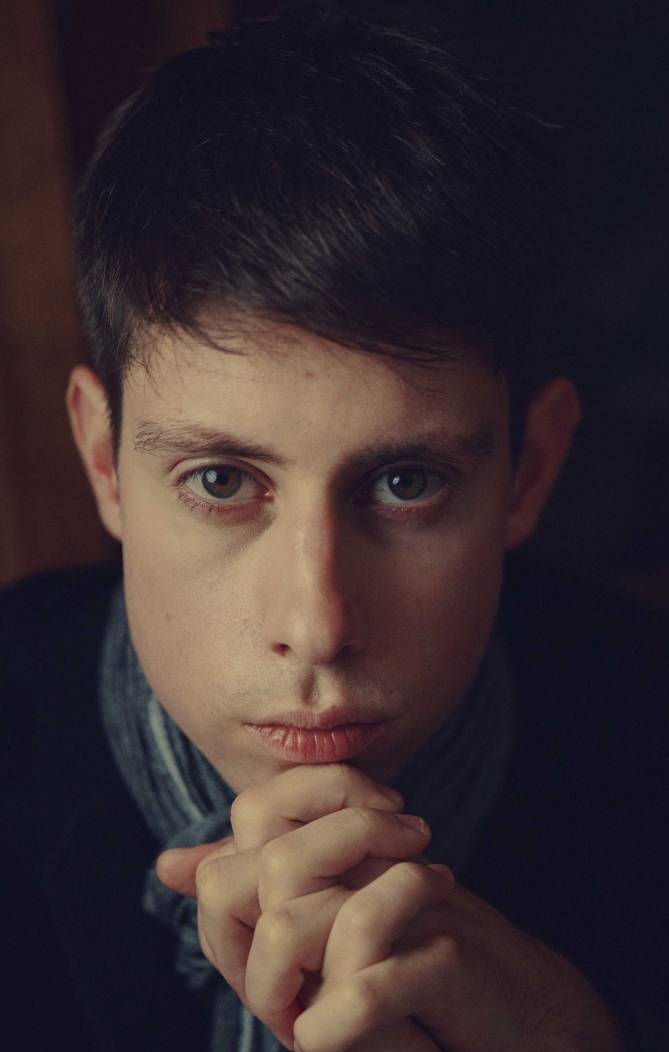
Nicolas Dozol trained at the Lyon Conservatory and the Rudra Béjart School in Lausanne before working with the Paris Opera Ballet. He later studied directing at CLCF in Paris, script analysis at UCLA Extension, and positive psychology at Harvard Medical School. His career includes short films, documentaries, and commercials featured at international festivals and on major streaming platforms. He has also worked on large-scale productions such as The Walking Dead: Daryl Dixon, Étoile, and The Killer by John Woo. Last Party premiered at the Locarno Festival and the Chelsea Film Festival in New York.
Search For Meaning
Last Party tells the story of four teens trapped together during what might be their final night. In one intense evening, hidden truths surface as they face what it means to grow up too fast. The film’s single‑take style pulls viewers into the moment, making every conversation feel immediate and real. It’s a movie for anyone who remembers being on the edge of adulthood, unsure of what comes next. Viewers may see themselves in the characters’ confusion, their small acts of courage, and their search for connection. Last Party doesn’t just capture a night, it reminds us how easy it is to lose sight of life while rushing through it.